

Changing the trajectory of
complex, chronic illness through
structured, strategic intervention.
The Roots & Wings
Restorative Health Framework
For long-term, chronically ill adults ready to restore stability, energy, and cognitive clarity.
Human but Clear (Rewritten)
Many people with persistent symptoms have already tried multiple approaches. Often what’s missing is not effort, but structure — time to step back, look at patterns, and reduce volatility before adding more intervention.
My work is built around steadiness. We begin with a thorough assessment and take time to understand how sleep, stress, inflammation, and prior treatments have interacted. Changes are introduced slowly and in sequence.
The six‑month structure protects this process. It allows for stabilization, adjustment, and review without the pressure of quick fixes. The aim is greater stability and resilience over time.
Section 2
More Human / Relational (But Still Contained)
Many people seeking care for complex symptoms have already tried multiple approaches. Often, what is missing is not effort, but structure — a way to step back, assess patterns carefully, and reduce volatility before adding more intervention.
My work is designed around steadiness. We begin with comprehensive assessment and take time to understand how sleep, inflammatory load, stress exposure, and prior treatments have interacted over time. Change is introduced deliberately, not reactively.
The six‑month structure exists to protect that process. It allows space for stabilization, thoughtful adjustment, and ongoing evaluation without the pressure of quick fixes. The goal is not perfection, but greater stability and resilience built methodically.
Clinical but Clear (Rewritten)
Complex health issues rarely change from a single appointment or a quick adjustment. They usually involve multiple systems and have developed over time.
My work is structured as a six‑month engagement so we can look carefully at patterns, reduce destabilizing inputs, and introduce changes in a deliberate sequence. We begin by stabilizing what is volatile before adding anything new.
The focus is steady oversight. We identify what is driving symptoms, simplify where possible, and adjust gradually. The goal is not intensity. It is stability that holds.
2. Recognition
Chronic pain that never fully resolves.
Sleep that remains fragile despite effort.
Interventions that help briefly but fail to hold.
You may have worked with multiple practitioners. You may have tried elimination diets, supplements, medications, testing, protocols. Some pieces helped. None fully stabilized the whole.
Often the concern is not only the symptoms themselves, but the quiet question beneath them:
Is something being missed?
When instability persists, more effort is rarely the solution. Clear direction is.
If you’ve decided it’s time to stop messing around and finally get better, you’re in the right place.
Recovery from complex illness is not simple. But it is not impossible.
My framework is both Systematic and Strategic.
a situation where not all of the relevant health pieces have been collectedor connected yet.
Sometimes, things are just missed.
Just as often, things are found — and assumed to explain everything. Even when those pieces are important, they can be just one part of the overall picture.
Most approaches to chronic symptoms, including pain, exhaustion, and ongoing discomfort — aren’t designed to look for a high level of complexity. Complexity gets reduced — or not even considered.
And even if meaningful or effective protocols are developed, but not implemented in an order the body is ready for, the body may not respond, or it may overreact, causing setbacks to recovery
As the chronically ill person, when any of that happens it becomes very hard to understand:
— what is driving your symptoms
— what matters most
— and what to do next
This is the work I do. Thoroughly reassessing complex illness scenarios from the ground up, then guiding you toward what will actually help you get better.
Do you struggle with
chronic pain, exhaustion & general misery —
even after seeing a lot practitioners?
I think I know why…
First, let’s recap the path I think you are likely on. It’s for sure the one I was on.
In the beginning, you tried to get more sleep, took OTC pain solutions, exercised more. Then exercised less.
Read lots of articles in magazines, on social media, and YouTube.
Bought a multi-vitamin — then a stack of vitamins.
Eventually you started to stay home either to conserve energy (for the most important things like work and sleep) or because you simply had no energy at all.
You ran to your family doctor or internist, not once, but many times. The good news was your bloodwork was good but -- unfortunately you weren’t. Good that is.
Then came all of the specialists the family doctor referred you to:
gastroenterologists
infectious disease docs
endocrinologists
pulmonologists
cardiologists
even psychotherapists
Then there were all of the other practitioners your friends and acquaintances recommended like:
massage therapists,
physical therapists,
acupuncturists, and
chiropractors
Lately, you would say you haven’t given up, but you don’t know what to do next… More of what you are doing isn’t likely to help, is it?
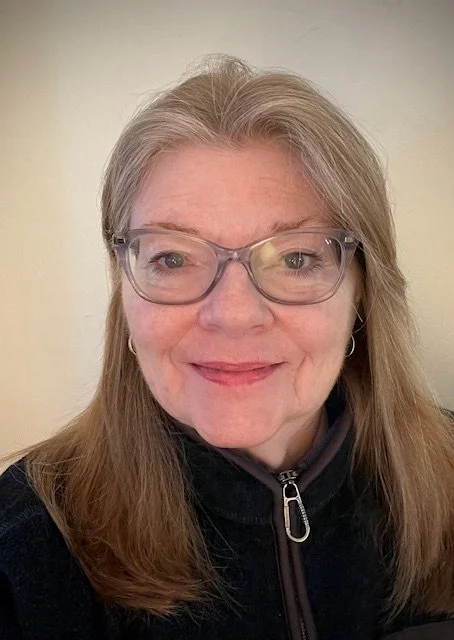
I’m Ellen Nicholas, a Functional Health and Wellness Practitioner.
Who I Am
I developed complex chronic illness in 1984, later recognized as Lyme disease. Living with long‑term complexity required sustained problem‑solving and careful restructuring.
I later pursued formal training as a Board Certified Holistic Health Practitioner (BCHHP, AADP) and as a Functional Diagnostic Nutrition Practitioner (FDN‑P). My work focuses on mapping complexity, sequencing intervention, and restoring stability before layering intensity
XXXXXXXX
I am a board-certified Holistic Health Practitioner (AADP) and trained as an FDN-P (Functional Diagnostic Nutrition Practitioner).
My work focuses on people dealing with complex, long-standing chronic illness where symptoms are layered, confusing, and often poorly addressed by conventional approaches.
I take a systems-based approach that looks at how the body’s major systems interact, and develop a coherent strategy to support and rebalance those systems, with the goal of restoring stability and rebuilding capacity over time.
Later on this page, I share more about how I arrived at this work and the philosophy that guides it.
So what do I think the real problem is?

First, I don’t think it’s you.
I think you were mostly consistent.
You certainly wanted to get better.
You did most or all of what was recommended by your practitioners.
And there isn’t ANY chance they didn’t want you to get better.
So why do I think you may not have gotten better yet?

Because you still don’t have all
or at least enough —
of the pieces to the puzzle that is you.
Specifically, the unique, bio-individual combination of medical, genetic, microbial and other relevant issues and factors that shape your physiology.
3. Why Progress Often Stalls
Chronic cases rarely stall because a person is not trying hard enough.
They stall when:
Stabilization was never fully established
Interventions were layered without sequencing
Nutrient depletion was underestimated
Inflammatory triggers remained active
The body’s adaptive capacity was exceeded
Efforts were fragmented across providers
Without coordinated strategy, complexity compounds.
Progress requires structure.A few specific thoughts on why you may not have gotten better:
1. Insufficient attention was paid to ALL the symptoms you had. Possibly you weren’t even aware of some things as being relevant and didn’t bring them up. Or you weren’t asked.
2. Insufficient testing or surveying of the physiology, or better stated: the function of the various operating systems of your body. That testing is not covered by insurance and therefore, is not an option with traditional medicine practices.
3. Inattention to how the various body systems interact and what should be taken into account when healing.
4. Even when good information is gathered and individual pieces are addressed, without a unifying strategy, it’s difficult to know what to prioritize, what to do next, or how all of the pieces fit together.
5. A lack of coordination between all of the strategies and protocols used to address all of the factors that in combination are the root cause of your complex illness. Not everything should be done at the same time, in the name of speedy healing, nor can they be done out of order.
6. If you’ve been sick for more than six months to years, the problem isn’t that you haven’t been trying. The problem is that when you are on the traditional medicine track, every doctor is responsible only for their area of expertise.
The family practitioner is for diagnosing and treating illnesses they can easily identify and can address but then they refer you out for everything else.
The cardiologist for your heart.
The gastroenterologist for your digestive tract.
The pulmonologist for your lungs.
The endocrinologist for your hormones and thyroid
The gynecologist for sex hormones.
And neither the medical doctors nor your alternative practitioners are keeping the other informed. That leads to a patchwork of care that doesn’t tend to work.
6. Even when good information is gathered and individual pieces are addressed, without a unifying strategy, it’s difficult to know what to prioritize, what to do next, or how all of the pieces fit together.
Now, maybe, working with me, for the first time in years — you can just stop the endless spinning. Simply rest and focus on getting better.

Most people living with complex chronic illness eventually reach a point of decision fatigue or mental fatigue.
Questions arise each day. In addition to the ongoing logistical questions of how to make it through the day, these questions are always running on repeat:
Am I doing the right thing?
Is what I’m doing even working?
Is it making me worse?
If this doesn’t work, what do I do next?
This leaves you always scanning for new possible cures. The constant researching, experimenting, and second-guessing becomes exhausting. And stress inducing…
Inside the Mystery Illness Solution, you step into a structured container where there is a reduced stress path with:
— A process that is based not only data based on your assessment but also quickly reactive to your body’s responsivity to the process.
— The next steps you should take are reassessed on a weekly or biweekly basis.
— Weekly or biweekly appointments keep you feeling seen, attended to and heard. Not blowing in the wind.
This is not a promise to know everything in the moment. Simply a promise you are always accompanied on the journey.
4. Who I Am
I developed complex chronic illness in 1984, later recognized as Lyme disease. Living with long‑term complexity required sustained problem‑solving and careful restructuring.
I later pursued formal training as a Board Certified Holistic Health Practitioner (BCHHP, AADP) and as a Functional Diagnostic Nutrition Practitioner (FDN‑P). My work focuses on mapping complexity, sequencing intervention, and restoring stability before layering intensity.
I live in the Hudson River Valley and work closely with a limited number of individuals so that each case receives deliberate attention.
My copy: How I Got Here
For many years, I was the person spinning and searching for answers.
I lived with chronic pain and bone-deep exhaustion for nearly three decades and saw dozens of practitioners along the way. All were well-intentioned, but no one was putting the pieces together.
Part of the difficulty was timing. When my very first symptoms began in the 1980’s, the medical understanding of tick-borne illness and other complex chronic conditions was extremely limited.
I bring decades of lived experience with complex chronic illness so I understand what it feels like to keep searching for answers when nothing seems to explain why you still feel unwell. And wondering how to get by each day.

Eventually I encountered a systems-based approach to understanding health that enabled me to stabilize my health, meaningfully reduce symptoms, and begin rebuilding my foundations and capacity.
That experience led me to pursue professional training and eventually build the structured process that became the Mystery Illness Solution, so that others would not have to spend decades searching for the same answers.
5. How the Six‑Month Engagement Works
We begin with a comprehensive assessment to understand the full picture — history, prior interventions, symptom patterns, sleep architecture, nutritional status, and overall stability.
Initial focus is directed toward stabilization. When pain, sleep disruption, or inflammatory volatility are active, they are addressed directly and appropriately. Stability creates the conditions for meaningful progress.
Laboratory testing is introduced selectively when it will materially inform next steps. Testing is not automatic, and it is not avoided. It is used strategically.
As we proceed, interventions are introduced thoughtfully, monitored closely, and adjusted based on your response. The process is adaptive but never chaotic.
The goal throughout is to change direction deliberately — not to add more activity.
6. Strategic Use of Laboratory Testing
Many individuals navigating chronic pain and sleep disturbance worry that something important has been overlooked.
One purpose of carefully selected laboratory testing is to ensure that meaningful drivers are not missed.
When appropriate, I may incorporate advanced assessments such as:
Organic acids testing
Environmental toxin panels
Mediator Release Testing (MRT) for inflammatory food reactivity
Comprehensive micronutrient analysis, including redox markers
Select genetic testing when deeper clarification is warranted
Testing is used when it meaningfully guides intervention and supports forward movement.
Not every test reveals a dominant finding. That information is still valuable. It narrows the field and allows us to proceed with greater precision and confidence.
The objective is always the same: to change the trajectory of illness toward improvement.
Learn More About Clinical Use of Advanced Laboratory Testing
7. What This Work Is Designed to Produce
This approach is designed to support:
Greater physiological stability
More predictable sleep patterns
Reduced inflammatory volatility
Improved resilience to intervention
Clear sequencing of care
Confidence that meaningful contributors are being addressed
Progress in complex illness is rarely dramatic. It is cumulative and directional.
Relief often begins when instability decreases and direction becomes clear.
9. Who This Is For
This work is appropriate for:
Adults navigating chronic pain, sleep disruption, or long‑standing instability
Individuals willing to proceed deliberately rather than urgently
Those who value structured collaboration and thoughtful intervention
It is not appropriate for crisis management or rapid, protocol‑based solutions.
6. Strategic Use of Laboratory Testing
Many individuals navigating chronic pain and sleep disturbance worry that something important has been overlooked.
One purpose of carefully selected laboratory testing is to ensure that meaningful drivers are not missed.
When appropriate, I may incorporate advanced assessments such as:
Organic acids testing
Environmental toxin panels
Mediator Release Testing (MRT) for inflammatory food reactivity
Comprehensive micronutrient analysis, including redox markers
Select genetic testing when deeper clarification is warranted
Testing is used when it meaningfully guides intervention and supports forward movement.
Not every test reveals a dominant finding. That information is still valuable. It narrows the field and allows us to proceed with greater precision and confidence.
The objective is always the same: to change the trajectory of illness toward improvement.
Learn More About Clinical Use of Advanced Laboratory Testing
The Mystery Illness Solution.
What is it?
Who is The Mystery Illness Solution (MIS) for?
It is a program: for people with chronic pain, bone-deep exhaustion, and general misery whose ability to do the following has been radically and adversely affected:
— work
— take of themselves, their family, and their home
— get out of/stay out of bed
— plan and execute activities
— get to family events they normally wouldn’t miss like barbeques, reunions, weddings, funerals, Easter, Thanksgiving & Christmas dinners
— maintain community ties like go like grocery shop, get to doctors, drive, socialize and get to church
It is accepted that they will need not only the clinical support but also caring human contact due to the way chronic illness leaves people both isolated and often without social support.
The stated goal is that: over the length of time we work together, we will jointly bring you along a path from VERY NOT WELL to a state where significant improvement has been made and you feel SIGNIFICANTLY MORE ABLE and WELL.
The further goal: is by the end of our time together you will have:
— meaningfully reduced your symptoms,
— learned to manage your nervous system,
— learned to optimize your wellness through various strategies and inputs given any constraints of your health,
— rebuilt and learned to sustain your health foundations, and
— increased your energy and stamina.
What is the purpose of the Mystery Illness Solution
How long is the program?
The length of the program and how long we will work together are two different questions. The Mystery Illness Solution is priced as a six-month program.
The length of time we will work together will differ by individual dependent on how quickly they respond to the process. That will be affected by how ill they are at the onset and if they remain motivated and willing to do “the work”. Some will step in and out of the program as they go through phases.
Some people will be able to make significant progress and move on at the end of the six-month container. Others with more layers of contributing factors (number of illnesses or infections, genetic factors, unwillingness or inability to move through phases quickly) will reasonably need a longer container which can be addressed on a monthly or quarterly basis when the situation arises.
What strategies are utilized to effect change?
What actually happens to bring you along a path toward improved wellness?
Rigorous assessment of multiple body systems for factors related to your illness. These include hormonal, immune, digestive, detoxification, energy production, and the nervous system.
Functional lab testing will be performed at your expense in accordance with your wishes. MORE information is always better as long as it conforms to available budget.
Protocol development in response to data found during the assessment. This will be updated monthly.
Non-medical lifestyle protocols in many areas that will be developed that affect all body systems, improving your body’s symptoms, energy and ability to function
What level of support can you expect? What is the contact policy?
How often is reasonable? A relatively high frequency of contact is built into my practice.
We will meet on zoom or speak by telephone a minimum of once weekly for the first six weeks. We will then change to every other week.
Additionally, I will hold Facebook office hours on Monday mornings and Thursday afternoons for approximately 1.5 hours. Anyone with questions will come online at that time to ask their questions related to their protocols or symptoms. Anything personal will become a quick phone call.
On weekends, my phone will be turned off. Anyone wishing to make contact for something at least semi-serious, will be able to leave a message on Facebook. If in the normal course of events I see it, I will make contact if it’s at all convenient.
Disclaimer regarding guarantee of wellness
It is expressly understood that Ellen cannot make you well. Paying for my service is not going to effect change in your health. It is only by your following and implementing the strategies and recommended inputs that you can reasonably expect to improve your symptoms, energy and capacity.
You will have tough days but you already have tough days. It will work in your favor that latitude in frequency of contact and my belief that coaching and encouraging you on a frequent basis — is the way to help you successfully rebuild your health and overcome chronic illness.
The Six‑Month Framework
Complex, long‑standing conditions rarely shift through isolated appointments. They require a structured arc long enough to stabilize volatility, introduce change deliberately, and monitor adaptation over time.
The six‑month engagement follows a defined progression:
Phase I — Stabilization and Strategic Mapping (Weeks 1–6)
The early phase is intensive and analytic. It includes comprehensive case review, pattern identification, and reduction of destabilizing influences. Sleep regulation, inflammatory volatility, and foundational supports are addressed first.
The goal is not aggressive intervention, but containment and clarity. Effective sequencing begins only after instability is reduced.
Phase II — Targeted Intervention and Adaptive Oversight (Weeks 6–12)
Once stabilization is underway, more precise interventions may be introduced. Laboratory data, when utilized, informs refinement rather than reaction.
Adjustments are made deliberately, with close monitoring of response patterns. The emphasis remains on direction and tolerance — not intensity.
Phase III — Consolidation and Resilience Building (Months 4–6)
As volatility decreases and function improves, interventions are simplified and consolidated. The focus shifts toward durability — ensuring gains are stable and adaptive rather than temporary.
This phase allows the system to recalibrate without abrupt withdrawal of structure.
The six‑month container exists to protect this progression. Shorter intervals often interrupt momentum just as meaningful change begins to consolidate.
Section 8 A
What This Work Is — and What It Isn’t
This work is designed for people who are ready to slow down, look carefully at what their body is showing them, and work through a thoughtful process of rebuilding health.
It is not a quick protocol or a one-size-fits-all solution.
Instead, it is a structured container where we observe, prioritize, and make decisions carefully so your physiology has the best chance to respond.
Some people will find this approach deeply relieving because it replaces constant trial-and-error with a clearer path forward.
Others may prefer faster or more aggressive interventions, and that is completely understandable.
My work is best suited for those who value clarity, careful sequencing, and steady progress over time.
Section 8 A a
9. Who This Is For
This work is appropriate for:
Adults navigating chronic pain, sleep disruption, or long‑standing instability
Individuals willing to proceed deliberately rather than urgently
Those who value structured collaboration and thoughtful intervention
It is not appropriate for crisis management or rapid, protocol‑based solutions.
This work is designed for people dealing with complex, long-standing health issues.
It is not a quick fix, and it is not based on a single idea, diagnosis, or protocol.
It is a structured, thoughtful process that looks at your health as a whole — and works to rebuild it over time.
The work is:
a comprehensive, systems-based approach
individualized to your physiology
focused on stability, capacity, and long-term improvement
adaptive as your body changes.
The work is not:
a one-size-fits-all solution.
a single supplement, diet or diagnosis
a fast or linear process
dependent on guessing what to do next.
It’s a different way of working — one that is designed for complexity.
The Vision for Our Work Together
This is not about managing decline.
We are creating the conditions for your body — and your life — to expand again.
We are working toward something. Because if we’re not aiming for something specific, there’s no way to build meaningful change.
I am here to help you get better.
Not overnight. Not by throwing random things at your body.
But by working carefully and strategically so your system can actually change.
Everything we do has a purpose.
We are not just reacting to symptoms. We are working to improve how your body functions — because that’s what changes what your life looks and feels like.
If you are exhausted, we rebuild your energy — and then we make sure you know how to use it so it’s there for the parts of your life that matter — to you.
If your body has become reactive, we calm it down and stabilize it so you’re not constantly getting knocked off course. We move slowly.
We sequence things carefully, so you don’t trigger reactions that set you back weeks or months.
That matters.
If your life has gotten smaller, then yes — part of this work is expanding it again with rehabilitative type work.
But we do it in a way your body can support, so you’re not constantly pushed forward and pulled back.
One of the first things I will ask you to do is make a list of the things you want to be able to do again.
Not someday.
Not theoretically.
Your life.
Lets see how many of those we cna help you get back.
This work has direction.
It builds.
And it requires participatio
This work isn’t about managing decline.
This work is about creating the conditions for your body - and your life to expand again.
You may not know exactly what that looks like yet.
So we start here:
having more energy during the day
thinking more clearly
feeling more stable in your body
no longer spending all your time trying to manage symptoms
From there, we rebuild.
returning to activities you’ve had to give up
being able to make plans again
feeing more like yourself
expanding what your life can hold
If your world has gotten smaller, this is the work of making it larger again.
This work is for you if:
you’ve been dealing with symptoms for months or years
if your symptoms include chronic pain and exhaustion plus sleep disturbances, gut issues, anxiety, disinterest in eating, weakness, etc.
you’ve tried multiple approaches without lasting results
You feel like something is being missed
you are willing to work through a proess, not look for a quick fix
This may not be for you if:
you are looking for a simple answer or solution to a complex problem
If you think, or hope, that a long-term problem can be cured in several weeks or months
you are not in a place to engage in a structured process
you have cancer. Cancer requires specialization that I do not possess.
If this approach aligns with how you prefer to work, the next step is the comprehensive assessment.
It allows us to determine whether a six‑month engagement is appropriate and whether we are well‑matched.
Begin Assessment

If you can imagine these or similar activities you would like back in your life — it can make all the difference whether and how well you can recover.


You could feel better than you
have in years…
after the Mystery Illness Solution.
If you can imagine these or similar activities you would like back in your life — it can make all the difference whether and how well you can recover.
Getting back to work and stabilizing your finances again.
Playing with your kids or grandkids.
Being able to go to the ocean again.



Let’s Recap:
My program, The Mystery Illness Solution, has been deliberately designed for those with complex chronic illness including chronic pain, exhaustion, and the general misery that comes with them.
You can think of it as a healing program, but it is also a six-month respite from having to make all of your health decisions yourself. Abating decision fatigue can be a very big deal. You will always have a sounding board whether it’s a question regarding something like zinc or should I go with my friends on a bus to Atlantic City.
The purpose of this program is to change the trajectory of your health. How do we do this?
With The Roots & Wings Systems and Symptoms Assessment, we take a deep-dive into your case — assessing from the ground up:
your health history including past diagnoses
your physiology with systems analysis and lab testing
matching your lab test results with the clinical presentation of symptoms
to have your physiology and functionality assessed to see where
implement a coordinated a clinical response calculated to address all of your symptoms/issues in a sequenced manner that will:
first stabilize what you have going on
AND then work to remediate and balance your physiology and systems
And systematically work to rebuild your health foundations so you can enjoy as robust a life as you can. The end result for each individual will vary based on your body’s renewed capacity.
The Mystery Illness Solution
The Clinical Process
My signature program, The Mystery Illness Solution, has been deliberately designed for those living with complex chronic illness.
My work begins by gathering a full picture of your physiology and history, then building a coherent strategy to support and rebalance the core body health systems involved in your health.
Comprehensive History & Intake
We begin with a thorough intake
including health history, systems and symptom screeners, and relevant functional lab testing to establish a clear baseline for our work.
Systems
We then assess your physiology and the body systems that influence one another, identifying patterns that may be driving your symptoms.
Clinical Strategy
Once we understand your landscape, we develop protocols that will help you stabilize, and reduce the symptoms that brought you here.
Monthly Reassessments
At regular intervals, we step back to assess what’s improving, what is not,
and mark meaningful progress as we determine the next steps.
Adaptive Process
The work proceeds in a structured
way, adding, tweaking and adjusting
the protocols as we monitor how your body responds, both in terms of tolerance and progress.
Six-Month Program
The program is structured as a six-month process, allowing enough time for meaningful and lasting physiological change to occur.
There is a natural progression to this work. As your system begins to stabilize, you will move through different phases of recovery and rebuilding.
You don’t have to figure out each step on your own. A central part of this process is taking the pressure off you to constantly decide what to try next.
Instead, we move through a structured, thoughtful process together — one that adapts based on how your body responds and how its needs change as we move through the program.
Investment
Roots & Wings Restorative Health Framework
Comprehensive Assessment: $875
Six‑Month Engagement: $6,000
Payment structure is discussed during the assessment process.
Roots & Wings
Systems &
Symptom
Assessment
Comprehensive Assessment: $875
Take an AirBnB Vacation
✳︎
Able to Return to Work
✳︎
Go to a Concert in the Park
✳︎
Walk on the Beach
✳︎
Play with the Kids *
Take an AirBnB Vacation ✳︎ Able to Return to Work ✳︎ Go to a Concert in the Park ✳︎ Walk on the Beach ✳︎ Play with the Kids *
Get In Touch
If you're interested in working with me, complete the form with a few details about your situation. I'll get back to you within 48 hours. Feel free to leave me some times that work for you and I’ll try to work with that.

Life becomes very narrow when you are chronically ill. I know this firsthand. For years, I worried about everything and did very little outside my home. I lost confidence in my body — in what I needed it to do — and in my ability to live a normal life.
It’s undeniable.
Chronic complex illness does change a life.
But life can change again…for the better.
It’s unlikely that life will look the way it once did.
But that’s not to say it can’t still be great in some ways.
Once pain, exhaustion, and misery begin to lift — or even disappear, you are free to create a life filled with things you can plan — and actually do.
A life, like any other, where there can be joy again.
4. Establish Priorities
Not everything needs to be addressed at once.
1. Take Inventory
We begin by mapping your symptoms and history through the Roots & Wings Systems & Symptom Assessment.
3. Identify Possible Drivers
We look for stressors that may be contributing to symptoms.
6. Support Recovery Over Time
The goal is steady improvement and rebuilding resilience.
HowXXXXXXXXXXX This Work Begins
2. Look at the Whole System
We evaluate how your body’s major systems are functioning together.
5. Sequence the Work Carefully
We introduce changes in a thoughtful order so your system is not overwhelmed.